The Economist Pride & Prejudice: Facebook Live Debate
Facebook Live production for The Economist’s Pride & Prejudice programme from Soho, combining four cameras with live polls, moderated social content, sound and streaming.
Turning a Soho discussion into a controlled live programme
The Economist planned a half hour Pride & Prejudice programme from Comptons of Soho on 24 May 2018, with a public audience, contributors and four camera operators sharing a compact venue.
The technical workflow had to support sound, camera communications, live polls and selected social responses while leaving editorial control with The Economist’s director, vision mixer and production team.
Facebook Live delivery with moderated audience interaction
Jay Rozanski produced for us and managed sound and stream technology, while Simon Taylor served as Technical Manager and handled graphics playout. We also provided video cabling, comms, monitoring and the systems connecting the camera team.
A browser based approval route let Economist staff review selected Twitter material before playout, with Facebook items selected manually. The programme streamed on Facebook Live, and we supplied the transmission master after the event.
In numbers
A live editorial programme in the heart of Soho
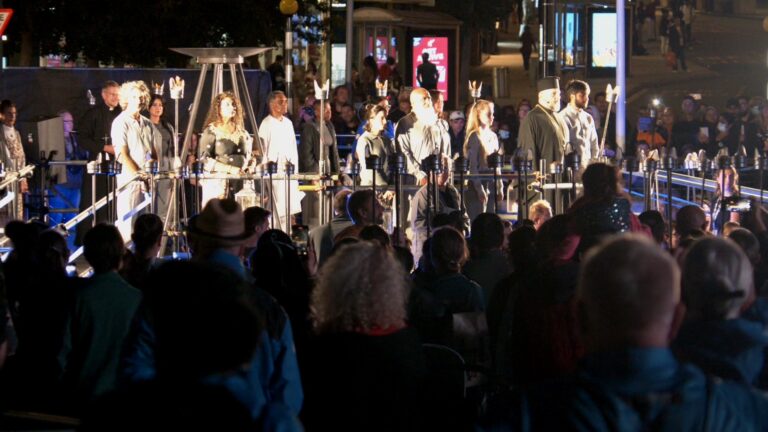
The Economist’s Pride & Prejudice programme was transmitted from the upstairs bar at Comptons of Soho on 24 May 2018. The half hour Facebook Live broadcast formed part of a day of international discussion about LGBT rights, identity and the practical gap between good intentions and meaningful action.
The London programme was scheduled from 19:00 to 19:30. The production day began at midday, with rigging, a technical rehearsal and time for the editorial and technical teams to test their cues before the live transmission. That preparation mattered in a public venue where a studio audience, contributors and a multi camera crew all shared the same room.
Clear ownership across editorial and technical teams
The Economist retained editorial control of the programme and supplied the director, vision mixer, floor manager and four camera operators. Its production also supplied the Sony FS7 camera kits, lighting and radio microphones. That defined a clean boundary between the editorial programme and the specialist systems needed to get it online.
Jay Rozanski produced for us and operated the sound and streaming workflow. Simon Taylor served as Technical Manager, looking after graphics playout and supporting the rig. We also provided the video cabling, camera communications, twelve comms headsets and wireless in ear monitoring needed to connect the people making the programme.
Live polls and moderated audience material
Poll graphics and progress bars gave the programme a live visual language. Selected responses from social platforms could also enter the programme through a controlled editorial route.
For Twitter material, we built a browser based approval system so Economist staff could review an item before it reached the graphics machine. Facebook selections were handled manually. Every audience contribution therefore passed through a deliberate approval step before appearing on air.
A Facebook Live route and a retained master
The Economist supplied the Facebook RTMP destination and the teams completed a pre live access test. LiveU formed part of the transmission workflow, and Facebook carried the delivered public programme. The Economist’s original Facebook post provides the contextual recording link.
After the event, we delivered the transmission master to the production team. The Economist’s Head of Production followed up with emphatically positive feedback and thanks for the technical support. This combination of live delivery, moderated interaction and an on demand master is a useful example of our live streaming production for editorial programmes.
Part of a wider international conversation
The Economist’s 2018 summit announcement describes a 24 hour programme spanning Hong Kong, London and New York. The half hour Facebook Live production from Soho formed our contribution to that wider day of programming.
We created the dependable technical path for the London programme. The Economist led its content, contributors and editorial decisions, giving both teams a clear role within the larger international operation.
Rehearsal connected every part of the live chain
Rigging ran from midday to 16:30, followed by a technical rehearsal at 17:00 and the live programme at 19:00. That schedule gave the teams time to confirm the camera and sound paths, communications, monitoring, Facebook access, graphics cues and social approval sequence as one complete system.
The final half hour transmission was the visible result of that preparation. The same plan carried through to the post show handover, with derig scheduled by 21:00 and the programme master supplied to The Economist after the event.
For practical planning advice, read our guide to unusual broadcast venues. Explore our The Orange Table panel production for related production work.
Frequently asked questions
When was The Economist’s Soho Facebook Live programme?
The half hour programme was broadcast from Comptons of Soho on 24 May 2018, with the live transmission scheduled from 19:00 to 19:30.
What did you provide for the broadcast?
We provided technical production covering sound, streaming, graphics playout, cabling, camera communications and monitoring. The Economist retained editorial control and supplied the director, vision mixer, floor manager and camera team.
Which platform carried the live programme?
Facebook Live carried the delivered public programme from Comptons of Soho.