HDMIPi: Kickstarter Product Video
A two minute Kickstarter product film for HDMIPi, combining founder interviews, product demonstrations and motion graphics for a campaign funded to 475%.
Introduce a new HD screen to the Raspberry Pi community
Cyntech and RasPi.TV were preparing HDMIPi, an affordable nine inch high definition screen, for a Kickstarter campaign with a £55,000 target.
The two minute film needed to explain the product to an international maker audience, establish the people behind it and show how the screen fitted Raspberry Pi and wider HDMI use.
Founder interviews, product detail and a clear pledge story
We planned a one day Sheffield shoot around Dave Mellor and Alex Eames, combining their interviews with workshop, component and screen footage plus a short 2D motion graphics sequence.
First day data showed strong completion and conversion, and the campaign ultimately raised £261,250 from 2,523 backers, reaching 475% of its target. Those figures describe the complete campaign result.
In numbers
A two minute campaign film for a maker audience
The production document defined a concise two minute Kickstarter film aimed at Raspberry Pi users and people looking for an affordable, portable HD screen. It needed to establish the product quickly and retain the practical detail that a technically curious audience would expect.
Dave Mellor of Cyntech and Alex Eames of RasPi.TV were the central contributors. Their knowledge gave the film a human route into the product, while the campaign structure supplied a clear target and call to action.
A one day Sheffield shoot built around people and product
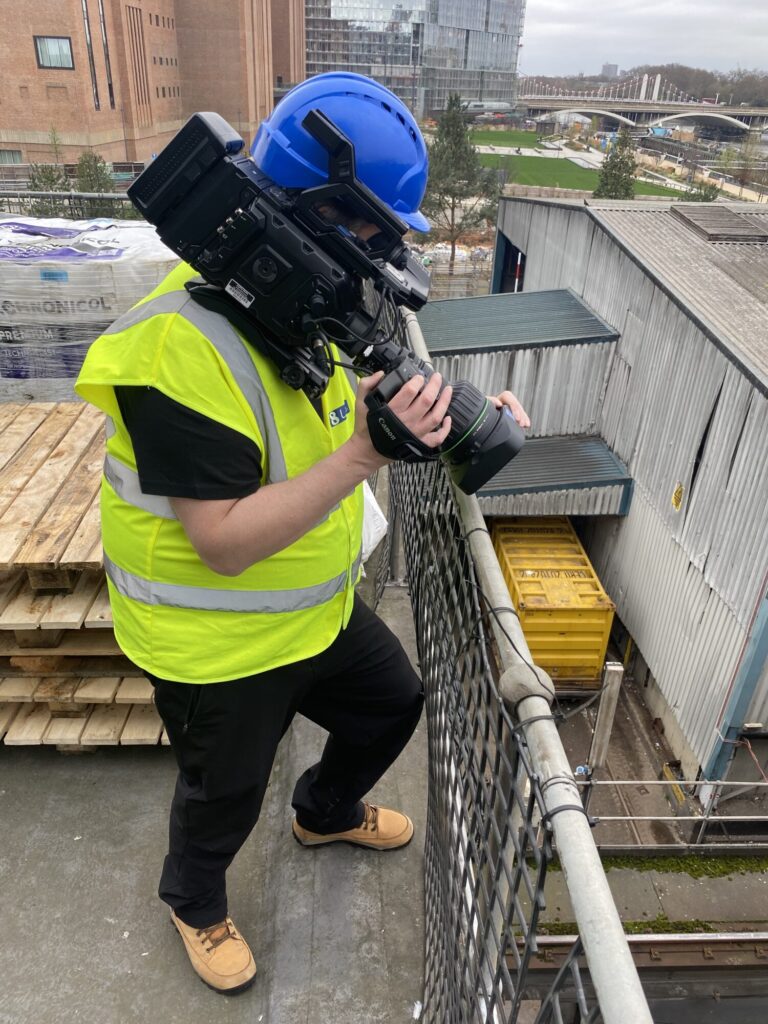
The shoot took place on 3 October 2013 at Pimoroni’s Burton Road unit in Sheffield. We planned interviews, workshop and component coverage, DSLR material and demonstrations of the screen in use.
Jay Rozanski produced and directed, with Jenny Alsina managing the account, Simon Rodman managing the project and senior edit, Dean Harris covering post production and motion graphics, and Carrie Domendziak-Forth assisting production. The planned workflow also included a short 2D motion sequence.
Early video data showed attention and action
HDMIPi launched on 31 October 2013. The next day, Alex reported that 38% of video viewers were watching to completion and that backers represented roughly 10% of video views, while the campaign had reached 30% of its target in less than 24 hours.
These first day figures show how the founders assessed the film inside the complete Kickstarter page. Completion indicated sustained attention, while the backer to view ratio offered an early view of action around the campaign proposition.
Founder credibility and product clarity shared the screen
Dave Mellor and Alex Eames could explain the problem, the development process and the intended uses in their own voices. Their interviews gave the product a recognisable team and helped a technically engaged audience understand who was responsible for bringing it to market.
Workshop footage, components and demonstrations supplied the visual proof around those interviews. The short motion graphics sequence could clarify a point that was difficult to capture physically, while the campaign call to action connected the explanation to a defined next step for viewers.
A compact script2screen allocation
The production document allocated one filming day, one edit day and one motion graphics day. That compact plan required the interview questions, product access, workshop coverage and graphic needs to be defined before the crew arrived at Pimoroni’s Sheffield unit.
Pimoroni provided the filming location and collaborated on the enclosure, while Cyntech and RasPi.TV supplied the client contributors and campaign proposition. We joined those inputs through production planning, filming, edit and motion work. The result was a focused script2screen workflow designed around the Kickstarter page and its two minute film slot.
£261,250 pledged by 2,523 backers
The completed campaign raised £261,250.46 against a £55,000 goal, reaching 475% funding from 2,523 backers. Kickstarter confirmed the result, which is also detailed by RasPi.TV’s published data.
RasPi.TV also said it was pleased with the film we made for the campaign. Together with Alex’s launch message that the video was “now doing its job”, it provides clear client proof for this script2screen product film case. The final totals describe the complete Kickstarter campaign.
For more on explaining a product to buyers, read our product launch video guide. Our Mech5 Kickstarter film shows another approach to combining founder interviews with technical explanation.
Frequently asked questions
Who commissioned and contributed to the HDMIPi film?
The recovered production document names Dave Mellor of Cyntech and Alex Eames of RasPi.TV as the client contributors. Pimoroni supplied the Sheffield filming location and collaborated on the enclosure.
What did the HDMIPi product film workflow include?
The plan covered founder interviews, product and component demonstrations, workshop and DSLR footage, editing and a short 2D motion graphics sequence.
How much did the HDMIPi Kickstarter raise?
The campaign raised £261,250.46 from 2,523 backers against a £55,000 target, equal to 475% funding.
Can the original HDMIPi campaign video still be watched?
The original YouTube upload is currently unavailable.