A remote production workflow connects the people capturing the action with the team directing, mixing and delivering the programme. Our work from MIF to GALWAD shows how contribution feeds, return pictures, sound and communication need to function as one production.
The best remote production almost disappears. José Mourinho can look across a virtual table at a comedian who is actually in another country. A performance can move through Coventry while viewers follow one coherent programme. A week long story can cross theatre, television, digital platforms and live venues without asking the audience to think about the connections underneath it.
Our journey from MIF17 to GALWAD charts distance becoming less visible as productions became more connected. LiveU, satellite, Quicklink, return audio, central galleries and backup routes all mattered because they allowed artists, contributors, directors and audiences to remain connected.
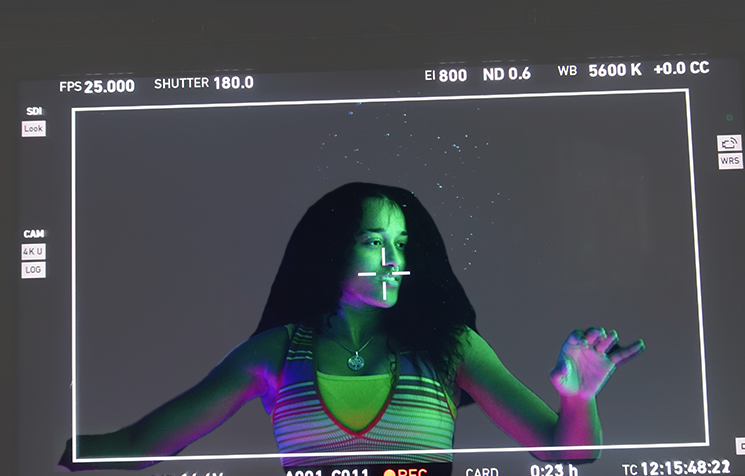
Across live festival links, a 24/7 arts stream, a virtual interview, city wide performance and transmedia storytelling, the workflow evolved around one human question: how can everyone who needs to take part feel as though they are inside the same production?
MIF17: portable connectivity across Manchester
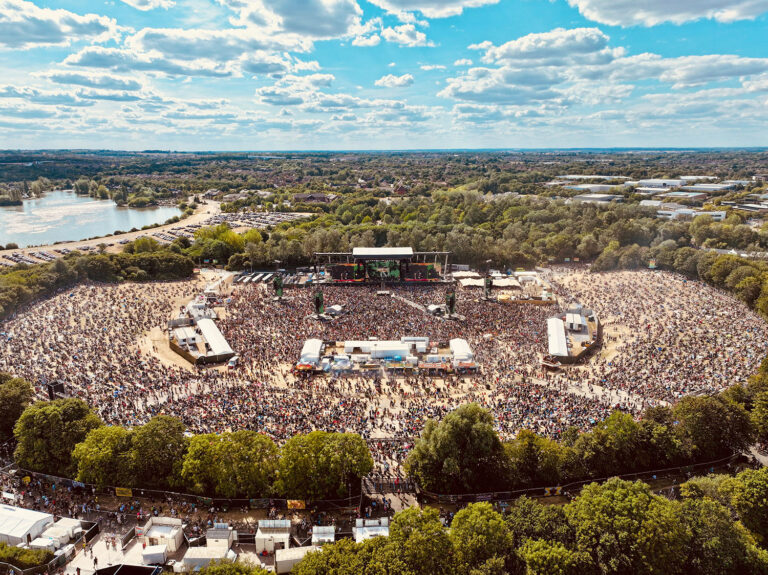
During MIF17, we worked onsite for 21 days across several live projects.
What Is the City but the People? required a live BBC link and online broadcast from Piccadilly Gardens. Manchester Street Poem required a 24/7 stream from a temporary Northern Quarter installation using more than one kilometre of cable, eight camera points, CCTV style multiview and LiveU. New Order at Old Granada Studios required satellite delivery to the BBC and online outputs to MIF and New Order Facebook pages in support of Lion Eyes’ show production.
These projects established two important remote production capabilities.
The first was adaptable contribution. LiveU and satellite routes connected temporary and unconventional locations.
The second was distributed responsibility. Festival, artist, broadcaster, production and digital teams needed clear handovers. We owned the relevant live links while working inside a larger creative programme.
From remote links to a remote conversation
Top Eleven’s José Mourinho production moved the model from event contribution to a virtual interview.
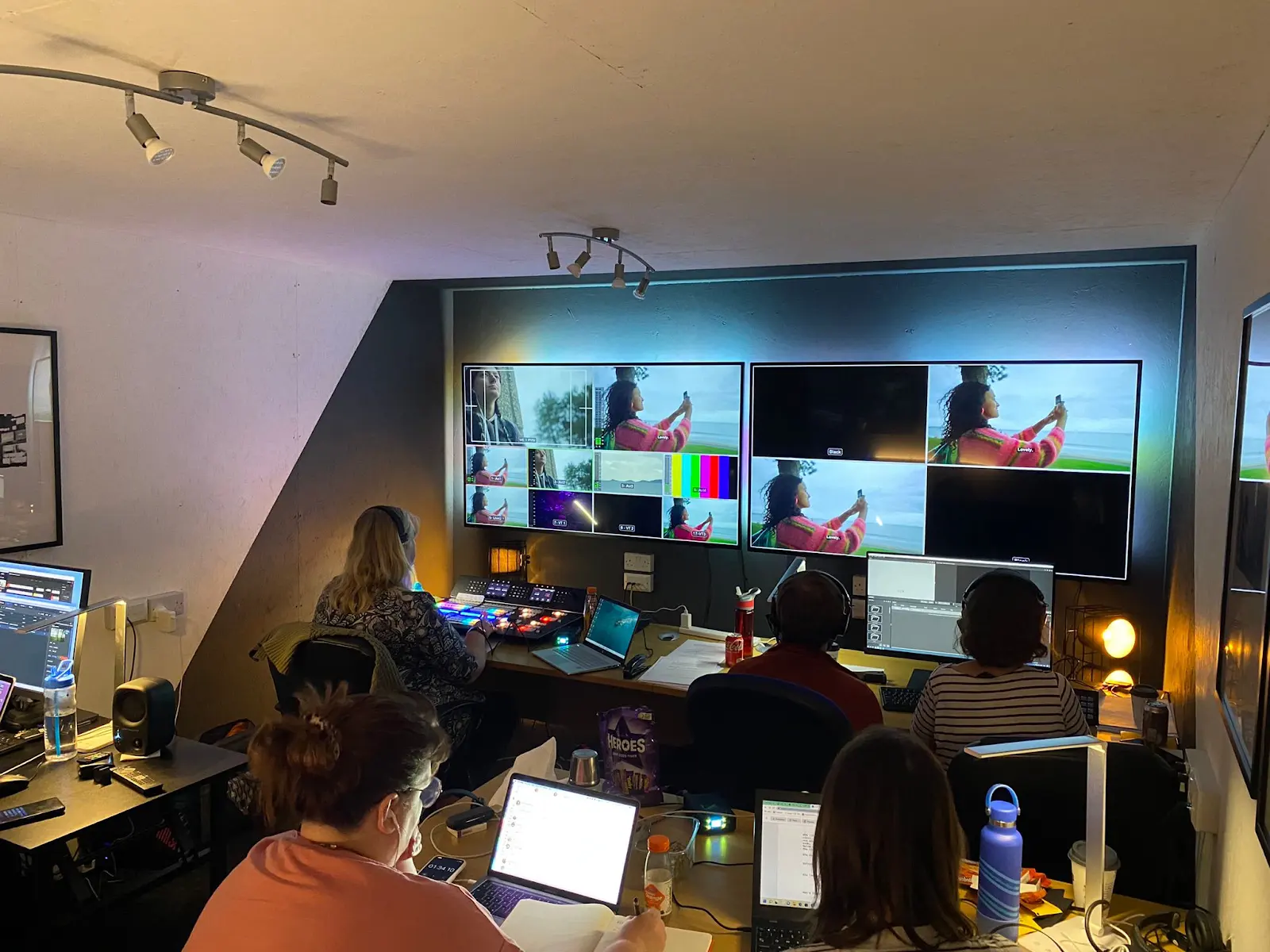
Mourinho was in London, comedian Conor Moore was in Dublin and we operated the production control room (PCR) from Sheffield. The director remained in London, while clients monitored from Switzerland and the United States.
Quicklink Studio ST55 connected the studios. Bi directional audio allowed conversation between locations. Eyeline monitors helped the contributors appear to address one another naturally. Green screen studios and cloud compositing created the shared visual environment.
The routing plan also included backup paths. Remote production earns trust through reliable creative connection. The viewer should experience the conversation while network complexity disappears from view.
The project shows an evolution from sending a finished event feed out of a location to managing the interaction between several locations in real time.
City wide production and accessibility
Coventry Moves expanded remote production across a city. Camera teams contributed from different locations into a central production workflow. Live and pre recorded material, graphics, broadcaster delivery and accessible outputs formed part of the wider event.
We delivered the live stream broadcast, with Jay Rozanski leading our team. Our central PCR brought together LiveU encoders, multiple vision mixers and programme recording.
The RSC Faith project later required five remote theatre programme masters in one day. The workflow supported moving performances and audiences, multiple camera contributions, captions, BSL and audio description.
These projects demonstrate why remote production is more than transport for pictures. It also coordinates timing, communications, accessibility and editorial continuity across places.
GALWAD: remote production inside a transmedia story
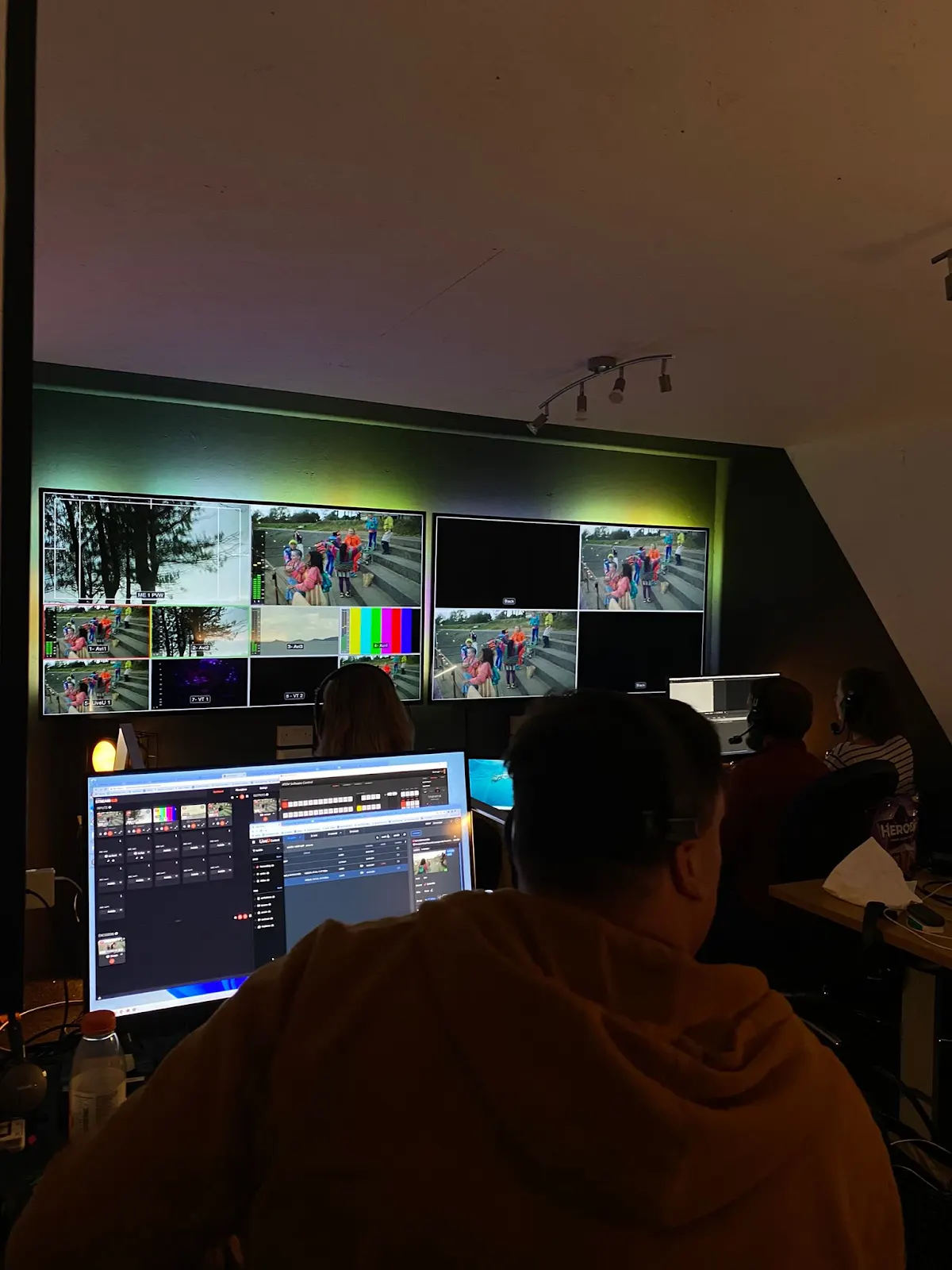
GALWAD was a week long story created by National Theatre Wales and commissioned for Sky Arts. It unfolded across theatre, television, online platforms and live venues from 26 September to 2 October 2022.
Jay Rozanski worked as Technical Producer. Our role included technical direction and broadcast production, delivering material to Sky Arts, online platforms and live venues.
This was a significant development from a single remote link. The production had to support a story designed to move between formats and audiences. Theatre, live events, broadcast and digital activity formed parts of one creative world.
The technical workflow therefore had to protect continuity across outputs. A contribution succeeded when it arrived in the right form, at the right time and within the logic of the wider story.
GALWAD’s ambition was recognised on some of the world’s biggest creative stages. It was a finalist in the Immersive category at the 2023 SXSW Innovation Awards and a nominee in the Multiplatform Series category at the 2023 Rose d’Or Awards. Pro Moviemaker also named Jay Rozanski its 2023 Livestreamed Event winner for his work on GALWAD. The recognition spans immersive storytelling, multiplatform production and the live broadcast craft at the heart of our contribution.
What evolved across the projects?
The first stage was a reliable contribution from unusual locations. MIF17 used LiveU and satellite links to connect public, temporary and performance spaces.
The second stage was distributed creative control. Top Eleven connected contributors, director, clients and PCR across countries while preserving a natural interview.
The third stage was multi location programme coordination. Coventry Moves and Faith combined remote feeds, central production and accessibility outputs across a city.
GALWAD brought those capabilities into a story operating simultaneously across broadcast, digital, theatre and live venues.
The progression moves from transporting a signal to managing a connected production environment.
The principles remained consistent
Clear ownership remained essential. Every project involved collaborators, clients and destinations with different responsibilities.
Monitoring and backup planning remained essential. A remote team needs clear confirmation that contribution and return paths are working.
Communication remained essential. Contributors, directors, producers, camera teams and clients need routes that support decisions without confusing the programme feed.
Our remote sports commentary workflow applies these principles to international fight pictures and commentators working in different locations.
The audience remained the final test. A remote workflow succeeds when it gives viewers coherent access to the event, conversation or story.
Why organisations choose remote production
Remote production can reduce the need to place every specialist at every location. It can connect contributors who would otherwise be unable to participate. It can centralise control across a city or several countries. It can also make unusual venues viable broadcast locations.
Those benefits are useful only when the workflow is designed around the production. Network choice, contribution equipment, audio returns, monitoring, communications, graphics, recording and redundancy need to work as one system.
Our record from MIF17 to GALWAD demonstrates that broader capability. The projects span live events, continuous streams, remote interviews, accessible city wide performance and multiplatform storytelling.
The strongest proof is the range of creative problems solved without losing the core production discipline: bring the right sources together, let the right people communicate and deliver a programme that feels coherent to its audience.
The apparent simplicity came from careful preparation. At MIF17 we managed long cable routes, eight camera points and continuous monitoring; for Faith we built accessibility outputs into a repeatedly tested city wide workflow; and GALWAD brought live venues, online platforms and Sky Arts into one unfolding story. Remote production works when those technical layers protect the people and the creative idea at the centre.
Read the GALWAD for Sky Arts case study and explore our live streaming service for audience delivery.
The decisions that shape a remote production workflow
Identify where cameras, contributors, the director and the production hub will be based. Map the contribution and return paths, then agree communications, monitoring, recording and backup arrangements.
Test the complete workflow with the people who will use it. The right design depends on the programme, available connectivity and delivery requirements.
Explore our outside broadcast services or talk to us about your production.