Live streaming from a venue starts with the audience and the space. An office town hall, theatre rehearsal or city performance each needs its own plan for cameras, sound, connectivity and participation. These projects show how we adapt the production around the place.
Some of our most memorable broadcasts began in places that were never meant to be television studios: a working Shakespeare rehearsal room, a communal office, a disused shoe shop covered in handwritten stories and streets spread across an entire city.
Those spaces mattered because of the people inside them. The RSC rehearsal room let pupils see creative choices before they became a finished performance. Manchester Street Poem gave individual voices and identities space to be heard. A DP World office kept leaders physically close to colleagues while remote viewers joined the same conversation.
The technical task was to bring studio level control into each location while preserving what made it meaningful. Cameras, sound, connectivity and monitoring had to fit around the room, the artwork and the people, preserving the character of each space.
Turning a London office into a broadcast environment
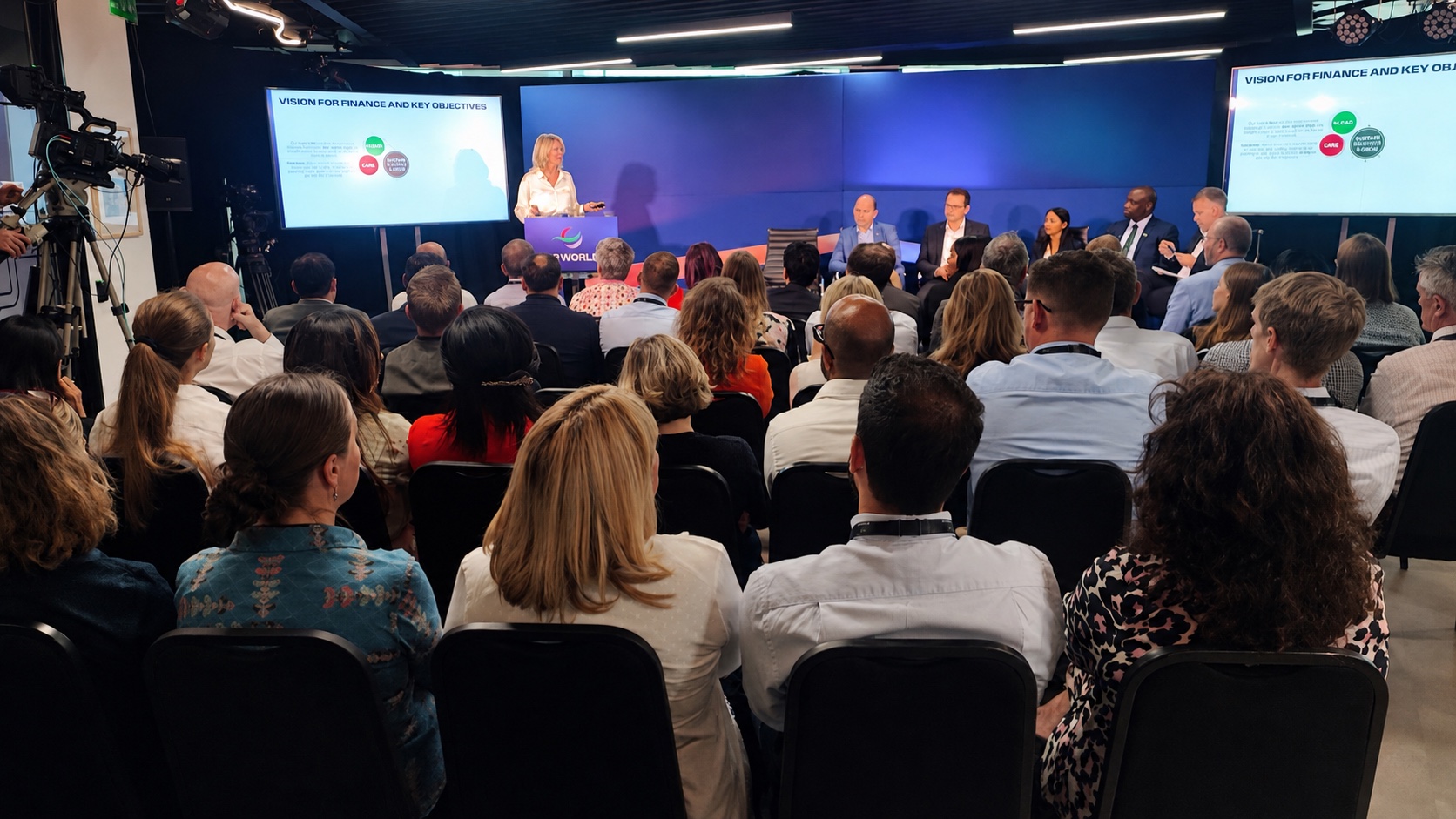
DP World’s European Regional Townhall in June 2023 brought senior leaders, remote speakers, an in room audience, presentation material and live questions into a communal area at its London office.
We worked with Conference Craft to transform that space into a branded hybrid production environment. The design included a layered scenic background, presentation screens, cameras, lighting, sound, graphics and remote contribution. The online programme was delivered through Microsoft Teams and a separate web player route.
The office still had to work for people seated close to the speakers. Camera positions, lighting and crew movement had to protect the in room conversation. At the same time, the remote audience needed clear pictures, readable presentations and dependable access.
The client later told us that more than 18,000 colleagues watched the programme across Europe. Many people joined in groups at DP World locations, and Microsoft Teams provided another route into the programme. We prepared an edited version rapidly after the live event. The project shows how corporate communication can retain the immediacy of a shared room while reaching colleagues across an entire region.
Live Shakespeare from a working rehearsal room
The RSC Romeo and Juliet Live Lesson originated from a rehearsal space while actors and the Deputy Artistic Director were still developing the balcony scene.
That environment created a different constraint. Production needed to make the creative process visible without turning the room into a conventional television set. Camera coverage, graphics and presentation had to support the discussion and allow pupils to follow subtle choices.
We produced the complete live broadcast. The RSC recorded 17,000 pupils watching, with classroom questions and comments contributing through Twitter and a bespoke Q&A system.
The result proves that an unusual location can be part of the editorial value. The rehearsal room became the reason the programme mattered.
A disused shop as a 24/7 arts channel
Manchester Street Poem occupied a disused footwear shop at 68 to 70 Oldham Street during MIF17. Conceived by Karl Hyde and Rick Smith of Underworld and co created with people who had personal experience of homelessness, it replaced a catch all label with individual voices, identities and stories. The installation evolved continuously as words covered the walls and fragments of recorded voices filled the space.
We produced a 24/7 livestream using more than one kilometre of cable, eight camera points, CCTV style multiview and LiveU connectivity. The visual language matched the space and the nature of the project. Viewers could encounter activity across the installation and see the work changing over time.
Continuous production changes the risk profile. The system needs to remain stable during long periods between editorial decisions. Camera positions, power, signal paths and monitoring must support long duration operation.
The project shows how production design can respond to an artwork and let the artwork define the broadcast grammar.
A city becomes the venue
Coventry Moves expanded the location problem across an entire city. The opening event for Coventry City of Culture combined live and pre recorded material, remote camera teams, central vision mixing, broadcaster delivery and accessible outputs.
We delivered the live stream broadcast, with Jay Rozanski leading our production as Producer. Our Primary Control Room (PCR) hub brought together Haivision and LiveU encoders, multiple vision mixers and programme recording, while the wider digital offer included captions, BSL and audio described versions.
The value of the PCR was coordination. Remote pictures could be received, checked and assembled into a consistent programme even though the activity was distributed around Coventry.
The RSC Faith project later applied similar experience to five remote theatre streams in one day. These productions demonstrate that the venue can be a route through a city, provided communications, timing, contribution paths and monitoring are planned as one system.
Remote studios across countries
Top Eleven’s José Mourinho interview created a location challenge without a public venue. Mourinho was in a London studio, comedian Conor Moore was in Dublin and our master control room was in Sheffield. The director remained in London, while clients monitored from Switzerland and the United States.
Quicklink Studio ST55 connections, bi directional audio, green screen studios, cloud compositing and eyeline monitors created the appearance of a natural shared conversation. The routing plan also included backup paths.
Remote production creates value by placing the right people in the right locations while maintaining creative control. The technical workflow succeeds when viewers concentrate on the conversation and the geography disappears from the experience.
Principles for broadcasting from unusual spaces
Start with the purpose of the location. A rehearsal room offers authenticity. An office keeps leaders close to colleagues. A city wide performance depends on movement. A remote studio makes participation possible.
Design the audience journey next. Decide what the viewer needs to understand, how contributors will interact and which elements require dedicated coverage.
Build resilience around the real risks. These may include limited space, public access, long cable routes, variable connectivity, remote audio, continuous operation or multiple accessible outputs.
Finally, define responsibilities across partners. Venue AV, show production, broadcast direction and online delivery may involve different teams. Clear handovers prevent gaps and duplicated effort.
Adaptable production in practice
The recurring proof across these projects is adaptability with control. We have converted offices into broadcast spaces, opened theatre rehearsal rooms to schools, run continuous arts streams from temporary buildings, coordinated live feeds across cities and connected studios across countries.
The technology changed because the problem changed. The production discipline remained consistent: understand the space, design for the audience, test the complete path and give every collaborator a clear role.
The Top Eleven production captured this particularly well. Chrome Productions described it as a technically demanding job with several issues to overcome, and credited us with delivering fantastic results. The achievement lay in making the finished conversation feel natural enough for the technology to recede.
See our company town hall production case study for a closer look at a programme connecting colleagues in the room and online.
Venue layout also shapes recorded event coverage. Our Sheffield Hallam Graduate Fashion Show film was planned around a circular presentation at the Millennium Gallery.
What to check before a venue livestream
Share the room layout, audience size, access times, available power and internet arrangements. Tell us where viewers will watch, whether speakers will join remotely and what recordings or accessible versions are required.
A site visit and a test of the complete viewing route help turn those details into a workable plan.
Explore our live streaming services or talk to us about your production.